Personal Portfolio
My Role
Full-stack Developer
Team
Solo project
Duration
2 months
Completed
Invalid Date
Project Overview
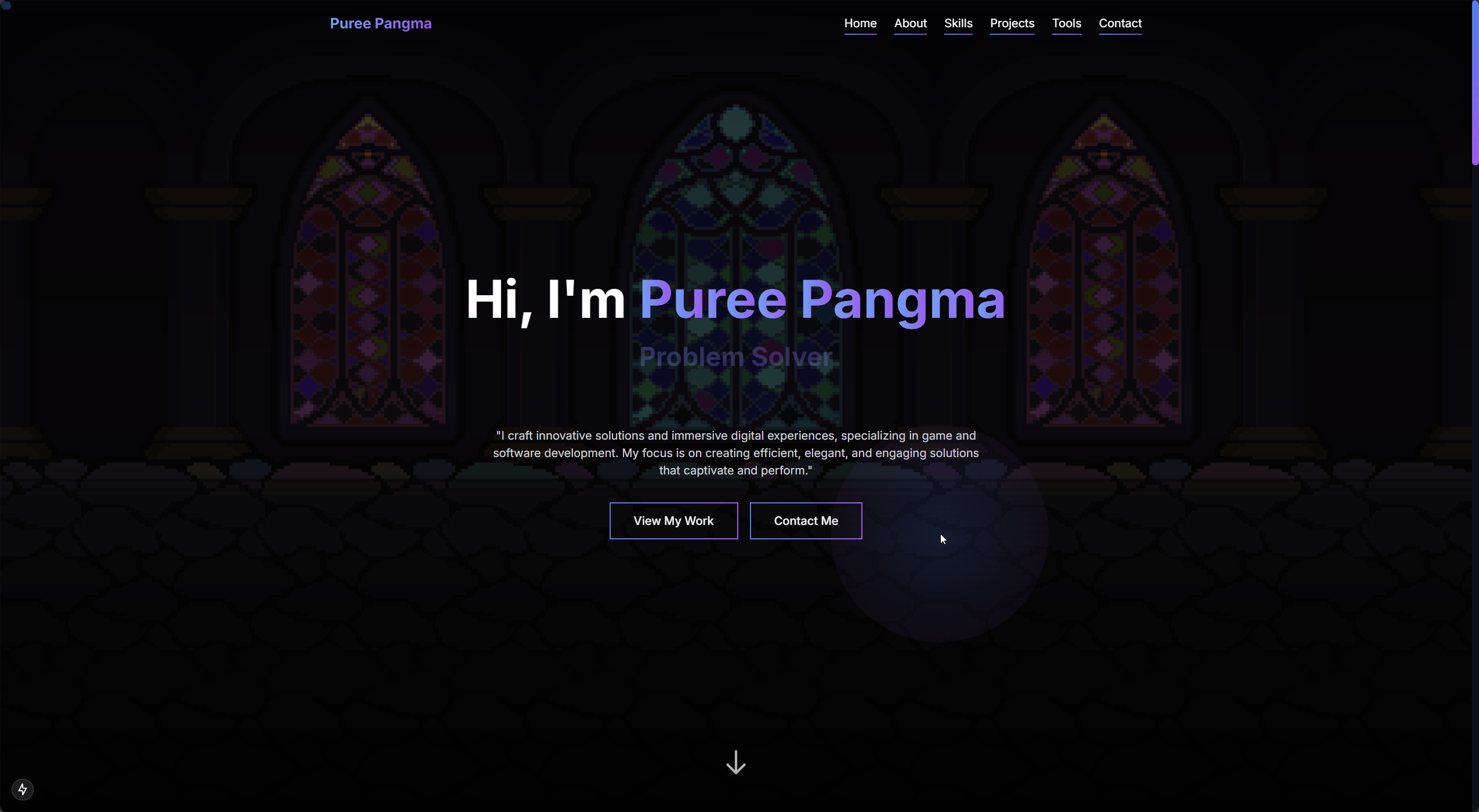
This portfolio showcases my skills, projects, and experience as a developer. It features smooth animations, responsive design, and a clean, modern aesthetic.
Design & Planning
I began this project by researching modern portfolio designs and identifying key features that would effectively showcase my skills and projects. I created wireframes and mockups using Figma, focusing on a clean, minimalist aesthetic with strategic use of animations to enhance the user experience without overwhelming it. Key design decisions included:
- A dark theme with gradient accents to create visual interest
- A single-page application structure with smooth scrolling between sections
- Strategic use of animations to draw attention to important elements
- Responsive design that works seamlessly across all device sizes
- Accessibility considerations including keyboard navigation and screen reader support
Frontend Development
I built the frontend using Next.js and TypeScript, leveraging the power of React components for a modular and maintainable codebase. Tailwind CSS was used for styling, allowing for rapid development and consistent design across the site. Key frontend features include:
- Component-based architecture for reusable UI elements
- Custom hooks for handling animations, scrolling, and other interactive elements
- Framer Motion integration for smooth, physics-based animations
- Optimized images and assets for fast loading times
- Dark mode implementation with persistent user preferences
- Custom cursor effects and interactive elements to enhance user engagement
Performance Optimization
Performance was a critical focus throughout development. I implemented several optimizations to ensure fast loading times and smooth interactions:
- Next.js static generation for optimal loading performance
- Code splitting to reduce initial bundle size
- Lazy loading of images and components
- Optimized animations to prevent layout shifts and maintain 60fps
- Caching strategies for static assets
- Minimized CSS and JavaScript through effective use of Tailwind and tree-shaking These optimizations resulted in excellent Lighthouse scores across all categories, with particular emphasis on performance and accessibility.
Content Management
To make the portfolio easy to update, I implemented a data-driven approach using TypeScript interfaces and JSON data structures:
- Centralized data files for projects, skills, experience, and other content
- Strongly typed data models to ensure content integrity
- Separation of content from presentation for easy updates
- Dynamic generation of project pages based on content data
- Automated generation of sitemap and metadata for SEO optimization
Deployment & CI/CD
I set up a robust deployment pipeline to ensure smooth updates and consistent quality:
- GitHub Actions for automated testing and deployment
- Vercel integration for preview deployments on pull requests
- Automated lighthouse testing to catch performance regressions
- TypeScript and ESLint checks to maintain code quality
- Environment-specific configuration for development and production
Challenges & Learnings
Building this portfolio presented several challenges that contributed to my growth as a developer:
- Balancing aesthetic design with performance considerations
- Implementing complex animations while maintaining smooth performance on all devices
- Creating a responsive design that looks great on everything from mobile phones to ultrawide monitors
- Managing the transition between server and client components in Next.js
- Optimizing image loading and display for different viewport sizes Through these challenges, I deepened my understanding of modern web development practices, particularly in the areas of performance optimization, animation techniques, and responsive design principles.